The card number your front desk never has to hear.
Guests, owners, and corporate clients send their cards through a secure Card Vault link. Your team charges a vaulted card when it's time, and nobody in your operation ever sees, types, or stores a card number again.
Free plan · vault up to 5 cards · no sales call required

Card-on-file, the way it usually happens
Every one of these is a PCI finding, a lost payment, or a breach waiting for a date.
Cards read over the phone
A guest recites their card to the front desk. It gets typed into a terminal, and too often written down first — on a booking sheet, a sticky note, a notebook that lives under the counter.
Card numbers sitting in the inbox
Third-party bookings and corporate reservations arrive by email with full card details. Now your mail server is a cardholder data environment.
The card that's dead by billing time
A number scribbled down at check-in is expired by the time the incidental or owner invoice runs — and nobody notices until it declines.
A PCI questionnaire nobody can honestly finish
Handwritten PANs and emailed card numbers put you in the deepest end of PCI scope — the 250+ question SAQ D — with evidence you'd rather not show an assessor.
Send a link. Get a card. Charge it when it's time.
No developer required — the whole workflow runs from the Card Vault console your team signs into.
Request
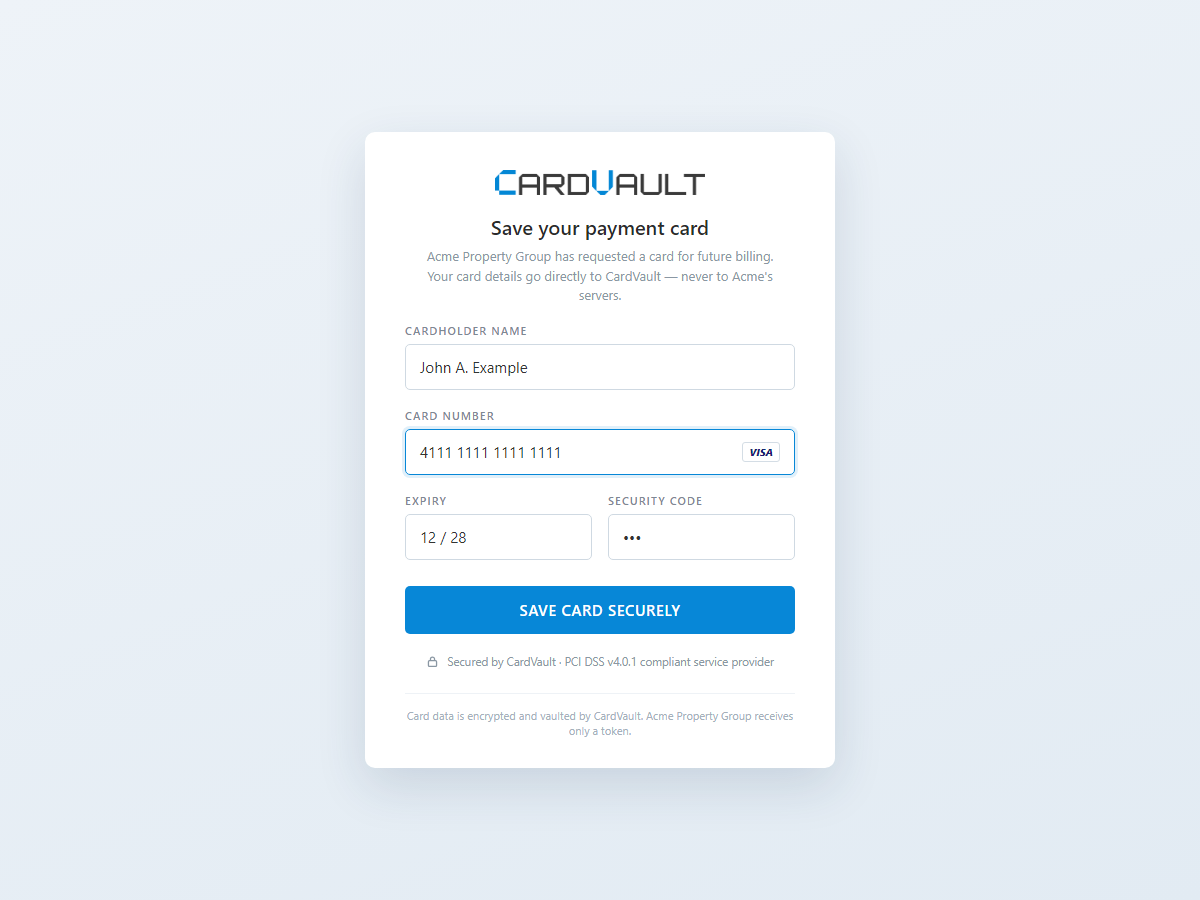
Send a secure card request by email or SMS from the console. The guest or owner opens a Card Vault-hosted page — your systems are never in the middle.
Vault
The card goes straight into the vault, encrypted. Your staff see the last four digits and expiry — never the number.
Charge
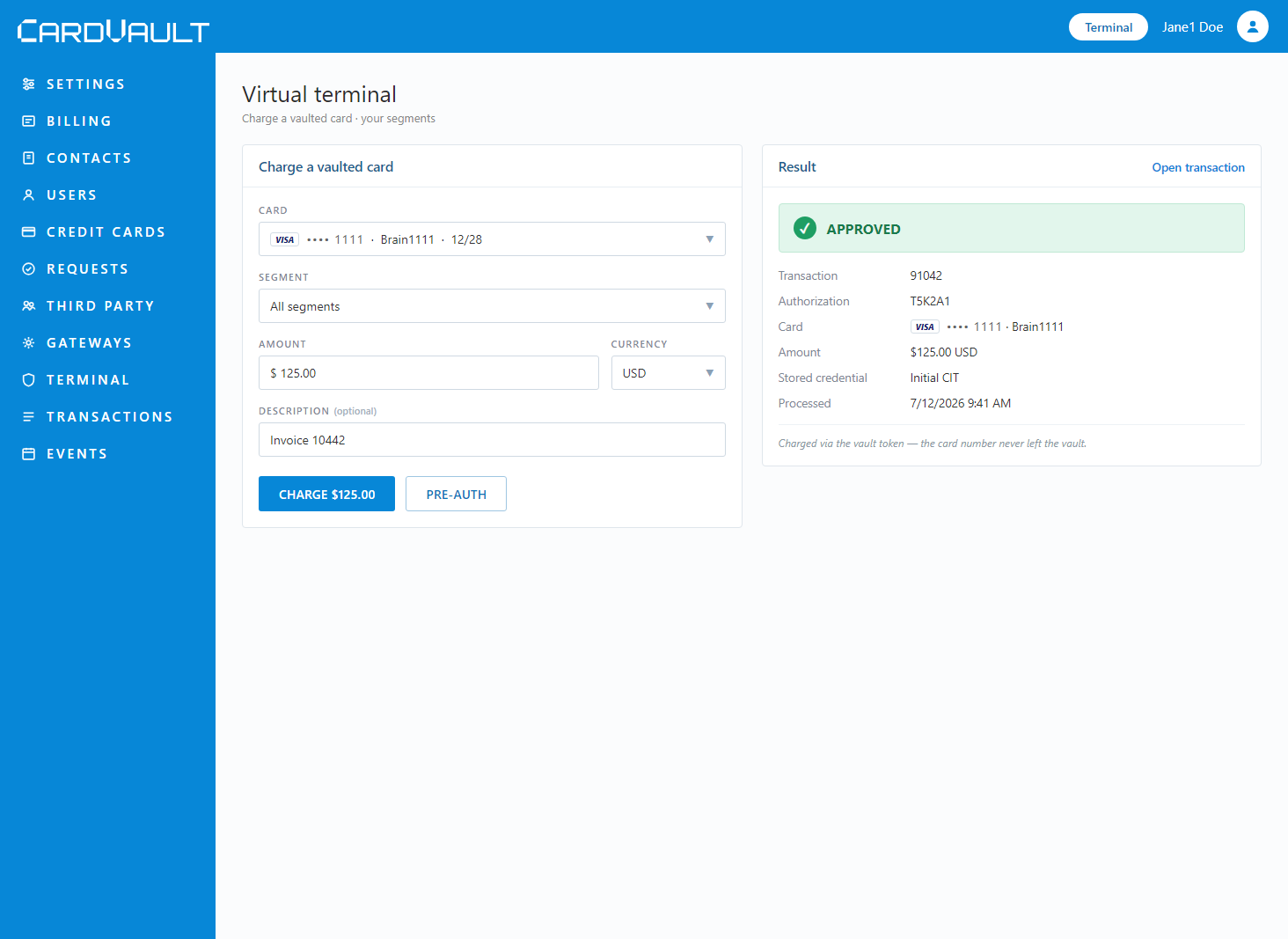
Charge the vaulted card from the virtual terminal — deposits, no-show fees, damages, owner billing — on your schedule.
One vault, every property
Segments per property
Each hotel, building, or portfolio gets its own vault segment under one account.
Per-segment staff access
Front desk at Property A never sees Property B's cards. Access follows the org chart.
Expiry warnings
Webhooks and console views flag cards expiring before the next billing run.
Every action logged
Who requested, who charged, who viewed — an audit trail your assessor will like.
Out of PCI's deep end
With card data out of your phones, inboxes, and files, your PCI scope shrinks dramatically.
Your processor stays yours
Card Vault charges through the payment gateway you already have — or any you switch to.
Sized for operations, not enterprises
Start free with 5 cards. A single property typically runs on Basic Vault at $79.99/mo (up to 400 stored cards); groups add a segment per property. Full pricing →
Retire the notebook under the counter.
Sign up in minutes. Send your first card request today — free.
Want the technical detail instead? Platform overview · Docs